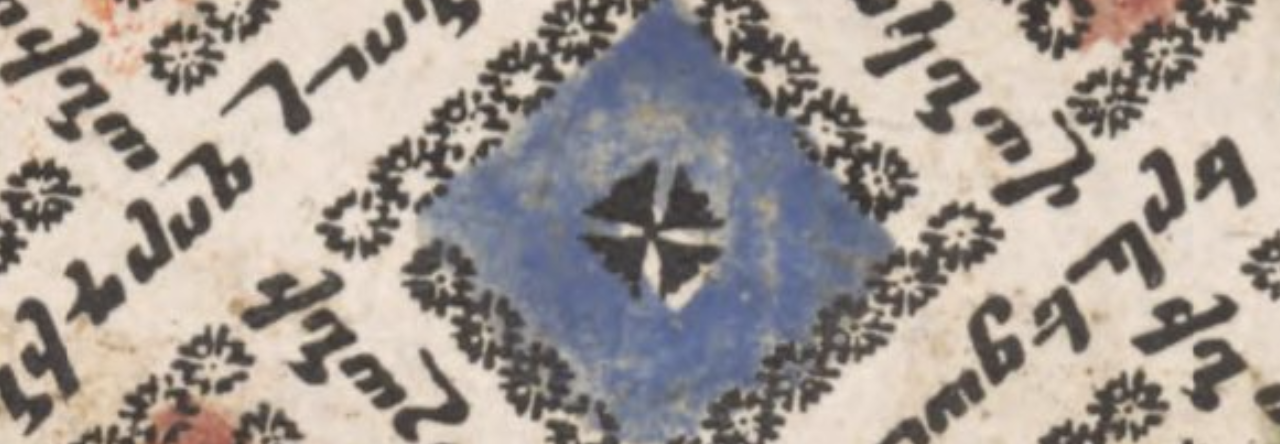
NEW BOOK RELEASED — Odes of Saint Nersess the Graceful: Annotated Translation by Matthew J. Sarkisian and Jesse S. Arlen

The Zohrab Information Center is pleased to announce the release of Odes of Saint Nersess the Graceful: Annotated Translation by Matthew J. Sarkisian and Jesse S. Arlen. The volume is the second in the Krikor and Clara Zohrab Information Center’s series Sources from the Armenian Christian Tradition and is available to purchase on Amazon.

St. Nersess the Graceful (Nersēs Shnorhali, 1102–1173 A.D.), catholicos from 1166 until his death in 1173, was one of the great figures of the medieval Armenian Church. His most popular work is the prayer of twenty-four stanzas commonly known as “With Faith I Confess” (Havadov Khosdovanim), which has been translated into more than thirty languages. He was also a prolific author and composer of hymns and other poetic works, many of which remain little known today. This volume presents the Armenian text and an English translation of sixty of St. Nersess’s liturgical odes (tagh), fifty-eight of which have never been previously translated into English. These profound songs of praise were composed to enhance the celebration and reflect on the mystery of the various feasts and commemorations that make up the Christian liturgical year. The translation is accompanied by an introduction and extensive annotation, which brings to light the Biblical, theological, and poetic features of these literary treasures, making them accessible to the general reader in the twenty-first century.

Tarkmaneal Press was founded in 2024 by Matthew J. Sarkisian and Jesse S. Arlen with the goal of bringing bilingual editions of classical Armenian texts with annotated English translations available to a wide audience. Sarkisian is a self-taught translator of Classical Armenian who lives in the Binghamton, New York area. He previously collaborated with Jesse Arlen on an annotated translation of an Armenian prayer scroll (hmayil), published in 2022 by the Krikor and Clara Zohrab Information Center. Arlen is the director of the Krikor and Clara Zohrab Information Center at the Eastern Diocese of the Armenian Church of America, and a postdoctoral research fellow at the Orthodox Christian Studies Center of Fordham University. He has published a number of studies on late antique and medieval Christian spirituality and monastic literature.

Praise for the Volume

“St. Nersess Shnorhali, Nersess the Graceful, belongs to the rank of those Church Fathers and Doctors who rightfully can be declared “the lyre of the Holy Spirit.” One of the earliest European Armenologists, the Jesuit Fr. Jacques Villote, admiring the sublime touches of heavenly inspiration emanating from Shnorhali’s verses, called his poetic masterpiece — named in Armenian Յիսուս, Որդի (Jesus, Son) from its incipit — “The Divine Elegy.” Nersess Shnorhali is one of the most exceptional figures in the history of the universal Church for more than one reason, but above all for his passionate search for the unity of the Church, and for his deep understanding, in the wake of St. Gregory of Narek, of the fragility, the conventionality, the inadequacy of human language in speaking of Divine mystery. The Odes in this volume, masterfully translated and commented upon by Matthew J. Sarkisian and Jesse S. Arlen, are among the most vibrant, genuine, and touching expressions of Shnorhali’s spirituality.”

— Abp. Levon Zekiyan, Emeritus Professor of Armenian Studies, Ca’ Foscari, Venice, and the Pontifical Oriental Institute, Rome

“St. Nersess Shnorhali’s hymns are known for their literary beauty and spiritual sublimity. Sarkisian and Arlen convey both aspects in their mellifluous translation. The substantial annotation they provide further defines their mastery of the classical text.”

— Abraham Terian, Emeritus Professor of Armenian Patristics and Theology, St. Nersess Armenian Seminary

“Thanks to Jesse Arlen and Matthew Sarkisian for this carefully prepared labor of love and learning. They have curated for us a trove of lesser-known, spiritual gems from the vast storehouse of St. Nersess Shnorhali’s writings.”

— Roberta Ervine, Professor of Armenian Christian Studies, St. Nersess Armenian Seminary

Aida Zilelian presents her new novel All the Ways We Lied

Please join us for the launch of our second annual monthly reading series, Literary Lights 2024, featuring Tölölyan Literary Prize recipient Aida Zilelian, author of All the Ways We Lied. Zilelian will be joined by Nancy Agabian, author of Princess Freak (2000), Me as Her Again: True Stories of an Armenian Daughter (2008), and the ​​PEN/Bellwether Prize for Socially Engaged Fiction finalist, The Fear of Large and Small Nations (2023). The event will take place on Zoom on January 27, 2024 at 12:00 PM Eastern (Register here).

Literary Lights is a monthly reading series organized by the International Armenian Literary Alliance (IALA), the National Association for Armenian Studies & Research (NAASR), and the Krikor and Clara Zohrab Information Center. Each event—held online—will feature a writer reading from their work, followed by a discussion with an interviewer and audience members. Keep an eye on our website and socials for the exact dates of each event. Click here to read along with the series by purchasing titles from IALA’s online bookstore powered by Bookshop or the NAASR bookstore.

Set in Queens, New York, while a father deteriorates from terminal illness, three sisters contend with one another, their self-destructive pasts, and their indomitable mother as they face the loss of the one person holding their unstable family together.

Kohar, the oldest sister, is happily married, yet grapples with fertility issues and, in turn, her own self-worth. Lucine, the middle child, is trapped in a loveless marriage and haunted by memories of her estranged father. Azad, the beloved youngest child, is burdened by an inescapable cycle of failed relationships.

By turns heartfelt and heart-wrenching, All the Ways We Lied introduces a cast of tragically flawed but lovable characters on the brink of unraveling. With humor and compassion, this spellbinding tale explores the fraught and contradictory landscape of sisterhood, introducing four unforgettable women who have nothing in common, and are bound by blood and history. Learn more about the novel.

Aida Zilelian is a first generation American-Armenian writer, educator and storyteller from Queens, NY. She is the author of The Legacy of Lost Things, recipient of the Tololyan Literary Award. She has been featured in the Huffington Post, NPR’s Takeaway, Poets & Writers, Kirkus Reviews, among other media and print outlets. Her short story collection These Hills Were Meant for You was shortlisted for Katherine Anne Porter Prize in Short Fiction. Zilelian was the curator of Boundless Tales, one of the first and longest-running reading series in Queens, NY, which she recently revived. She is on the Board of Directors of Newtown Literary, a Queens-based literary journal that supports emerging writers, and a IALA Advisory Board member. All the Ways We Lied is her second published novel.

Collection of Maps, Atlases, and Guidebooks available at the Zohrab Information Center

A collection of about one hundred maps has recently been processed and is now available for the interested public to view at the Zohrab Information Center, along with related atlases and guidebooks. The collection was processed by Linda Smith, a graduate student at Simmons University, pursuing a degree in Archives Management, who is concurrently an archival intern at the Zohrab Center.

The collection includes materials that cover over 2800 years of Armenian cartographic history that were acquired and donated over the years by various individuals. The maps, atlases, and guidebooks in this collection were published as early as 1880 and as late as 2003.

Illustrated Guide-Map of Historical Architectural Monuments of Soviet Armenia
Illustrated Guide-Map of Historical Architectural Monuments of Soviet Armenia (publication date unknown). This material is available in English, French, and Armenian.

The first three series of this collection include maps of Armenia and neighboring lands in the past. From consulting these maps, one can see the changes of Armenia’s borders and geographic features over time. There are maps that show its importance as part of the Bible lands, part of the Near East, and when it was in the Byzantine, Persian, Ottoman, and Turkish Empires and the Union of Soviet Socialist Republics (USSR)/Soviet Union.

Political and administrative map of the USSR
There are several maps that show Armenia within empires and unions, including this political and administrative map of the USSR, published circa the 1960s or 1970s.

There are also detailed, illustrated reference maps that highlight specific things within the country, including birds native to different parts of the country, architectural and monument maps, and a style map showing traditional Armenian dress.

Style Map of the Armenian People
Style Map of the Armenian People (publication date unknown). This is one of many available reference maps that give greater detail about the peoples within Armenia.

Birds of Armenia Reference Map

Scans of the Birds of Armenia reference map
Scans of the Birds of Armenia reference map, published in 1999. There are corresponding books available in the Zohrab Information Center catalog. A link in the finding aid will take a user directly to the catalog entries.

A treasured part of this collection includes maps of Havav Village in Palu, which were hand drawn from memory by Hareton Saksoorian after he escaped the massacres.

Maps of Havav Village in Palu (Բալու) by Hareton Saksoorian (Յարութիւն Ձախսուրեան), 1966

Maps of Havav Village in Palu (Բալու) by Hareton Saksoorian (Յարութիւն Ձախսուրեան), 1966. The first picture shows the Palu map drawn by Saksoorian; the second picture is another hand-drawn map showing part of Armenia in the Ortokid period of the 12th century; the third picture shows the border between Turkey and Armenia established by President Woodrow Wilson.

The fourth series includes historical atlases that compile several maps of Armenia over time in one book. One historical atlas in this collection can take someone through Armenia’s history and changing borders from 824 B.C. through 1964 A.D. Another is a road map of Armenia and neighboring countries.

Maps from the Hammond's Historical Atlas
Maps from the Hammond’s Historical Atlas. These depict Armenia as it was from 824 to 625 B.C., the sixth century B.C., and 1000 A.D.

Lastly, the fifth series contains guidebooks. These materials include text, photographs, or both of important and popular places in various Armenian locales. Most of the guidebooks are for the city of Yerevan, though there are some of Etchmiadzin, the island of San Lazzaro in the Venetian lagoon, and Armenian churches as well.

Maps and photos from a Yerevan guidebook published in 1982
Maps and photos from a Yerevan guidebook published in 1982. There are multiple guidebooks in the collection of Armenia’s capital city.

This collection is a visual representation of changes throughout Armenian history due to different leaders and struggles with neighboring countries and former empires. These materials are an invaluable look into the geography and boundaries of this country as they have remained the same and changed at various points in history, as well as places of interest that can still be seen in Armenia today.

Images from an Etchmiadzin guidebook
Images from an Etchmiadzin guidebook (publication date unknown).

This collection is now available for visitors looking to conduct research or consult maps and guidebooks to learn more about Armenia, its lands, and landmarks of the past and present. A searchable finding aid of the collection is available to view here.

Announcing Literary Lights 2024: A Reading Series Featuring New Works by Armenian Authors

The International Armenian Literary Alliance (IALA), the National Association for Armenian Studies and Research (NAASR), and the Krikor and Clara Zohrab Information Center will host Literary Lights 2024, their second annual monthly reading series featuring new works of literature by Armenian authors.

Each event—held online—will feature a writer reading from their work, followed by a discussion with an interviewer and audience members.

Click here to read along with the series by purchasing titles from IALA’s online bookstore powered by Bookshop.

The series will kick off on Saturday, January 27, 2024 at 12:00pm ET with All the Ways We Lied, a novel by Tölölyan Literary Prize recipient Aida Zilelian, that explores the reality of love and loss in the everyday lives of a modern-day Armenian family. Click here to register for this event on the Zoom platform.

Obscured Geographies: an Art Exhibition by Meghan Arlen opening on January 18th

The Zohrab Center is pleased to invite you to Obscured Geographies, an art exhibition by Meghan Arlen (wife of Zohrab director Dr. Jesse Arlen), opening on January 18th, 6:00-8:00pm ET at the gallery of Atamian Hovsepian Curatorial Practice (227 E 24th St, New York, NY 10010). The exhibition will be on display from January 18–February 24, 2024.

The work that will be on exhibit (selections available to view here or scroll down) was born out of the artist’s curiosity about land use and the monumental changes observed in the span of just one or two generations. Arlen was struck by the new and often surreal aerial geographies created by landscape alterations brought about by modern industrial agricultural farming, natural gas extraction, and large-scale residential developments. These changes of course are now visible to all simply by using Google Earth, or from the seat of a passenger airplane flying overhead. Arlen’s uneasiness about the large-scale processes that have produced these unnatural landscapes were at odds with the awe she felt about the eerily beautiful curves, colors, and compositions they created.

This collection of work—textural explorations of obscured aerial landforms—plays with movement and tactility. Obscured Geographies is also an ode to the medium of Venetian plaster and Arlen’s desire to use this material in new and creative ways. To observe the interplay of plaster with other materials, she incorporates charcoal, liquid iron, copper paint, gauze, fabric and other found textured and corrugated media. The results are beautifully intricate and wholly original.

Based in Brooklyn, Meghan Arlen (https://www.megarlenstudio.com/) studied fine arts as an undergraduate but has in recent years focused her energy on learning skilled trades. These include Venetian wall plaster application techniques, high-end interior design, specialty installation and fabrication, and building sculptural wood furniture. Beginning in 2015, Arlen apprenticed for several years under Justino Guerrero, a Los Angeles master Venetian plasterer. She concurrently worked for LA-based designer Andrea Michaelson, a savant in innovative material design, including metal, wood, glass, plaster, plastic, stingray skin, leather, and fabric. In 2021 Arlen moved to New York, where she undertook training in carpentry, learning to build sculptural, solid wood furniture from milling to finishing. She approaches her art practice as an artisan, submitting to the sometimes physically strenuous efforts that her material demands. Her recent work conveys her love for the historically two-dimensional medium of painting and a desire to explore its capabilities and create works where the wall plaster steps off the wall or canvas and becomes more relief than flat.

MEGHAN ARLEN
Obscured Geographies
Opening reception: Thursday, January 18, 6-8pm
January 18-February 24, 2024
227 E 24th St, New York, NY 10010

The black crept in: somnambulance, 2021
Plaster and medium over gesso on raw canvas, 34″ x 42″
Unrealized Utopias, 2023
Gesso and liquid copper on unprimed upcycled canvas (reclaimed dowel frame)
30″ x 24″
Unearthed II, 2023
Plaster and Charcoal on canvas
36″ x 36″
Y-Y Dyptich, 2021
Gesso and liquid copper on unprimed upcycled canvas (reclaimed dowel frame)
30″ x 24″

Watch the Recording of the St. Nersess Shnorhali Conference in Rome on YouTube Now

The international conference “Plenitude of Grace, Plenitude of Humanity: St Nerses Shnorhali at the Juncture of Millennia” took place Thursday and Friday (Nov 30–Dec 1) at the Pontifical Oriental Institute in Rome. The recordings of all sessions from both days are available to view online through the YouTube Channel of the Pontifical Oriental Institute or below.A conference flyer and schedule are also available to view below.

Conference on St. Nersess Shnorhali in Rome Available to Stream on YouTube

The international conference “Plenitude of Grace, Plenitude of Humanity: St Nerses Shnorhali at the Juncture of Millennia” is taking place this Thursday and Friday (Nov 30–Dec 1) at the Pontifical Oriental Institute in Rome. Among the invited speakers are Zohrab Center director Dr. Jesse S. Arlen, former Diocesan primate Bp. Daniel Findikyan, St. Nersess Armenian Seminary Emeritus Professor Dr. Abraham Terian and current St. Nersess Seminary Professor Dr. Roberta R. Ervine, along with an impressive lineup of scholars and clergymen.

The sessions will be broadcast live (and available for later viewing) through the YouTube Channel of the Pontifical Oriental Institute (www.youtube.com/@Orientale).

The conference was organized in conjunction with a series of events that were to take place in Rome and the Vatican, including concerts and an ecumenical prayer service, to honor the 850th year since the death of St. Nerses Shnorhali. Unfortunately, all events apart from the conference have been indefinitely postponed.

A conference flyer and schedule are available to view below:

Zohrab Information Center Special Collections available to the public

A group of special collections comprised of hundreds of photographs, letters, scrapbooks, and other artifacts has recently been processed and is now available for the interested public to view at the Zohrab Information Center. The collections were processed by Linda Smith, a graduate student at Simmons University, pursing a degree in Archives Management, who is concurrently an archival intern at the Zohrab Center.

The collection includes over 125 years of materials that were donated over the years by various individuals.

Dr Elias Riggs
Dr. Riggs was a missionary who lived from 1810-1901 and worked in the Ottoman Empire for decades. He helped guide the translation of the Bible into modern Armenian. The plate was made and colored by E.F. McLouglin, 36 Bromfield St., Boston.

The first series contains several small portrait photographs and photographic glass plates from Armenian photographers based in Constantinople/Istanbul in the late nineteenth and early twentieth century. These photographs and plates show various leaders, religious figures, and people at work or with their families, as well as various sites in Armenia and the former Ottoman Empire.

Bashi Bozooks
Bashi Bozooks were irregular soldiers of the Ottoman army raised only in times of war.
Zeibek
Similar to a bashi bozook, a zeibek was an irregular militia and guerrilla fighter who lived in West Anatolia from the late 17th to early 20th centuries.

The second series consists of photographs and other personal artifacts from Zaven Melik-Shah Nazaroff, whose brother was Soss E. Melik. Both brothers were artists, but Soss’s renown far surpassed Zaven’s. Both brothers, their parents Efrem Melik Shah-Nazaroff and Maria Avanesov, and friends and family members are featured in photographs, and artwork from both brothers is photographed as well.

Zaven Melik-Shah Nazaroff
Zaven Melik-Shah Nazaroff with a work of art, 1949.
Soss E. Melik
Soss E. Melik (left) is pictured here with Reinald Werrenrath, an American baritone opera singer who regularly performed under the name Edward Hamilton. This photograph was taken on August 20, 1939 in Kingston, NY.

The next series is by far the largest and consists primarily of materials donated either by former diocesan employees or people active in the diocese. The contents document people and events related to the diocese, or were donated by people who thought the materials would be of interest to the diocese and those connected to it. The materials include photographs, photo albums, clippings, letters, postcards, certificates, and other documents.

Mekhitarist monks
This photograph’s caption (in French) translates to “Armenian church vestments” and refers to the island of San Lazarro degli Armeni, home to the Mekhitarist monastery.
Reuben Nakian
From left, Reuben Nakian, Alex Manoogian, Archbishop Torkom Manoogian, Mrs. Reuben Nakian, and Mrs. Alex Manoogian. The sculpture on the left, a permanent installation on the St. Vartan cathedral plaza, was created by Nakian and is called “Descent from the Cross.”
Armenian dances
Delegates and guests performing traditional Armenian dances at the gala banquet for the 88th Diocesan assembly in Worcester, Massachusetts on May 5, 1990.
Scrapbook
A unique feature of this collection is the numerous scrapbooks and photo albums available. Here is a two-page spread from one album, available in box 11.

The fourth series is the Ashjian family donation. Zovig Ashjian donated these photographs, which are primarily of her father, Fr. Arten Ashjian (1919–2016), who played an influential and leading role in the diocese throughout his long pastoral ministry, including at St. James in Watertown, MA (1955–1969) and as a teacher at St. Nersess Armenian Seminary.

Father Ashjian, John A. Volpe, Archbishop Sion Manoogian
From left, Fr. Arten Ashjian, Massachusetts Governor John A. Volpe, and Archbishop Sion Manoogian at a banquet in Boston on March 28, 1965.
Father Ashjian
Fr. Arten Ashjian celebrating with others at St. Nersess Armenian Seminary in 1988. To Fr. Arten’s left are current seminary dean Fr. Mardiros Chevian and current Diocesan Vicar Fr. Simeon Odabashian.

The next series is the Joseph and Joyce Chorbajian donation. Joseph served on the original steering committee responsible for the construction of St. Vartan Cathedral. After the cathedral was operational, he served in many positions within the diocese. Several photographs show Joseph, his wife Armenouhie, and daughter Joyce throughout his life. Highlights of this donation include old passports of Joseph, Armenouhie, and Joseph’s mother Veronica and cards and letters congratulating Joseph for different honors bestowed upon him by the diocese and a banquet held in his honor on November 6, 1977.

Zareh Kapikian, Ralph Anoushian, Edward Bashian, Edward Chapian, and Joseph Chorbajian
From left, Diocesan delegates Zareh Kapikian, Ralph Anoushian, Edward Bashian, Edward Chapian, and Joseph Chorbajian in May 1970.
Joyce, Joseph, and Armenouhie Chorbajian
The Chorbajian family (the three people in the background facing the camera). From left, Joyce, Joseph, and Armenouhie.

The final series in this collection contains materials from the opening of the Zohrab Information Center on November 8, 1987 through its early years. There are several photographs from events that took place in St. Vartan Cathedral, the Zohrab Information Center, and nearby, including an assembly that took place outside the diocese seeking help and awareness for Armenians suffering from an Azeri blockade in the early 1990s.

Photographs from the opening of the Zohrab Information Center
Photographs from the early days of the Zohrab Information Center, which include Dolores Zohrab Liebmann, Bishop Khajag Barsamian, Fr. Krikor Maksoudian, Dn. Hovannes Khosdeghian, and others.
Dolores Zohrab Liebmann
An undated photograph of Dolores with Mr. and Mrs. Haik Kavookjian (located in the Zohrab Information Center opening series).
Assembly against Azeri blockade
Photographs of an assembly that took place outside the diocese seeking help and awareness for Armenians suffering from an Azeri blockade in the early 1990s.

These collections illustrate the experiences of Armenian people from the 19th and 20th centuries across the globe. It serves as an invaluable look into the lives and work of many Armenian people throughout history, especially those connected with the Armenian Church and Eastern Diocese. This collection is now available for visitors looking to conduct research or simply admire documents, artifacts, and photographs from the past. A searchable finding aid of the collection is available to view here.