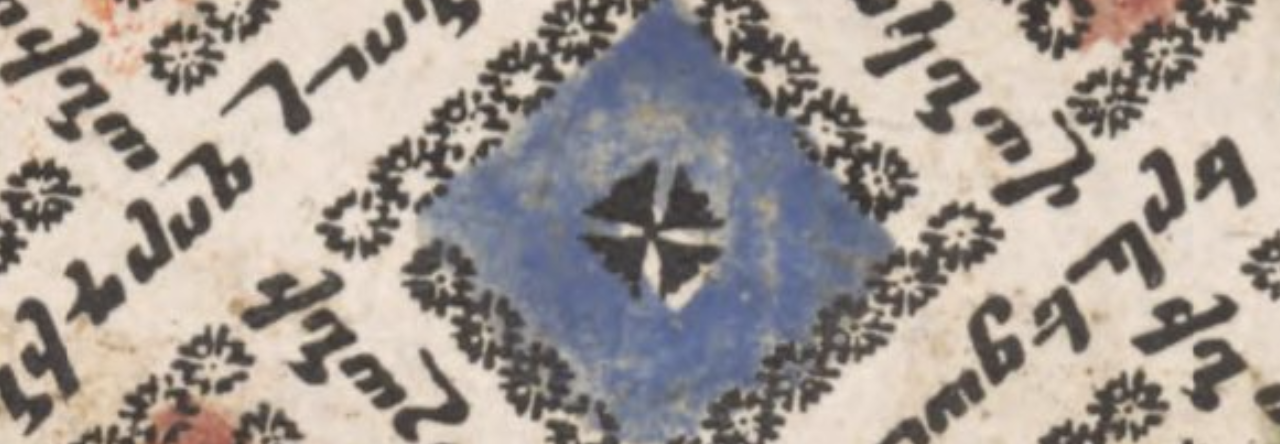
The recording of the conversation between Prof. George Demacopoulos with Dr. Jesse S. Arlen and Matthew J. Sarkisian on their book Odes of Saint Nersess the Graceful: Annotated Translation (New York, NY: Tarkmaneal Press, 2024) is now available to view on YouTube.
The Zoom webinar was hosted by the Orthodox Christian Studies Center of Fordham University and co-sponsored by NAASR and the Zohrab Information Center.
On Monday, April 15th at 4:00pm ET, authors Jesse S. Arlen and Matthew J. Sarkisian will discuss their new book, Odes of Saint Nersess the Graceful: Annotated Translation, in conversation with Prof. George Demacopoulos. The Zoom webinar is hosted by the Orthodox Christian Studies Center of Fordham University and co-sponsored by NAASR and the Zohrab Information Center.
A collection of hundreds of documents relating to the Armenian Cause including articles, letters, unpublished genocide survivor’s memoirs, exhibition catalogs, booklets, pamphlets, and ephemera has recently been processed and is now available for the interested public to view at the Zohrab Information Center. The materials in this collection relate first and foremost to the genocide of 1915, but also include materials related to the Soviet and post-Soviet Republic of Armenia, especially Nagorno-Karabakh (Artsakh). The collection was processed by Linda Smith, a graduate student at Simmons University, pursuing a degree in Archives Management, who is concurrently an archival intern at the Zohrab Center.
Photocopies of the first four pages of Yervant “Edward” Alexanian’s memoir Forced into Genocide: Memoirs of an Armenian Soldier in the Ottoman Turkish Army. Photocopies of the original materials were donated by his daughter and the memoir’s editor Adrienne Alexanian. This donation is held in boxes 6 and 7 of this collection.
The materials in the collection span over 100 years, originating from the end of the 19th century through 2022. These items were acquired and donated over the years by various individuals.
Panoramic view of Sivas, the Armenian quarter of Alexanian’s birthplaceAdrienne made notes like this one on several documents, so researchers can quickly gather details on a particular resource and its significance.
The collection’s first series is comprised of memoirs and accounts of survivors of the genocide. Most of these accounts are unpublished and unknown to both scholars and the general public, while some like Yervant Alexanian’s Forced into Genocide or Hagop Vartanian’s My Story were only published in English translation (while this collection at the Zohrab Center includes the handwritten Armenian original).
Alexanian at three different points in his military career. In the top photo, he is a new conscript in the Ottoman Turkish Army; in the middle photo, he is a new graduate of the Harbiye Military Academy; in the bottom photo, he is a second lieutenant.
Scans from the family history and diary of Hagop Vartanian, which was eventually translated and published in English by Dr. Roberta Ervine under the title My Story: Hagop Vartanian (1873–1950), Genocide: A Father’s Struggle from the United States.
These memoirs are handwritten (or, in one case, photocopies of handwritten and primary source documents) or typed on a typewriter/computer, with several survivors having pasted their own family photos within these materials.
A 1989 memoir entitled “My Name is Avak and I Survived The Armenian Holocaust of 1915: How a Young Boy, Avak Takeljian and His Family Became the Victims”.
This series in the collection provides precious new sources for genocide historians and the interested public alike, each one a testament both to the similarities in experiences of Armenian Genocide survivors while also highlighting the unique journeys of the various individuals and families during and after the tragedy.
Among those individuals is Zaven Seraidarian with his six bound volumes of handwritten notes, memories, poetry, drawings, and scrapbooked images.
“Left to Right: Zaven, Mari, Mihran Seraidarian. We are witness to 1915.”“Zaven Seraidarian – I was born in the Putania [Bithynia] region of western Asia Minor, Nicomedia, the town of Geyve, Kaylaplour [Wolf-Hill] or, in translation, the Turkish name Ghurtbalan or Kurtbelen, Turkey.”“Mihran – Zaven Seraidarian, two brothers, scions of a patriarchal family. We are witness to the two and a half million martyrs. Whoever reads this story of a bloody journey – we remain living in this world. Whoever does not read this story of a bloody journey – that is when we two brothers will be dead to this world.”“Springtime Teardrops – The world belongs to the powerful, may God take our vengeance upon our enemies – You must be sacred hearts in the world – H. T., M. M., Z. S.”“To the Armenian who speaks in a foreign language, always respond in Armenian.”
Seraidarian shares a mix of materials, including personal memories and emotions from his experiences of the First World War and the Armenian Genocide, expressed both in the contents of his writing and the various forms they take in the volumes.
He includes photographs of himself, as well as other images, and writes about the legacy of the Armenians of what is today the north-west of Turkey, historically known as Putania (Բիւթանիա) or Bithynia. Seraidarian was from an area by the town of Geyve near the major city of that region, Nicomedia (modern Izmit).
Seraidarian’s writings are repetitive, often dwelling on the horrors he witnessed and experienced, replete with longing for justice for himself and the Armenian people. Our current generation may assess his volumes as manifestations of journaling, or efforts to work through the traumas that so deeply afflicted his life.
The second series covers community and political activism, which includes documentation of worldwide efforts to raise awareness of the genocide, as well as more contemporary struggles involving Soviet Armenia, the Republic of Armenia, and Nagorno-Karabagh (Artsakh). This is the largest series, including articles, conference reports, and booklets. Materials from government subcommittees and from the House of Representatives and Senate show efforts to recognize April 24 as the National Day of Remembrance of Man’s Inhumanity to Man and hold Turkey accountable for its actions during and after the genocide.
An informational flyer that contains historic information about Armenia in general and the genocide.
The third series contains historical and informational documents. These are materials that provide background information about Armenia and the genocide, both from historical and contemporary points of view, often meant to influence public opinion, raise awareness, or educate younger generations.
A spread from a 1980 booklet entitled “Sauver ce qui peut encore être sauvé…les monuments arméniens de Turquie” (“Save what can still be saved…the Armenian monuments of Turkey”).
The final series contains materials from memorial events and exhibitions that took place in commemoration of the genocide. The booklets and articles in this series provide a comprehensive picture of how Armenians around the world have continued to remember and speak about the Armenian Genocide and its aftermath, as well as educate the general population through sharing stories and art.
A booklet for an art exhibition entitled “Absence Presence: The Artistic Memory of the Holocaust and Genocide”, which was held at the Katherine E. Nash Gallery at the University of Minnesota from January 7-February 25, 1999.
This collection brings together a wide array of mostly unpublished materials related to the Armenian Cause in general and the genocide in particular, including unpublished and previously unknown survivor accounts. This collection also highlights the efforts of Armenians and their allies the world over to remember the tragedy, honor the Armenian people, hold the Turkish government accountable, and share their experiences through the arts and community engagement.
A scan of H.R. 191, a bill passed in the Texas House of Representatives officially recognizing the Armenian Genocide. This resolution passed in 2017.
This collection is now available for visitors who want to research the genocide and learn more about past and present efforts related to genocide remembrance and activism for the Armenian Cause. A searchable finding aid of the collection is available to view here.
The Zohrab Information Center is pleased to announce the release of Odes of Saint Nersess the Graceful: Annotated Translation by Matthew J. Sarkisian and Jesse S. Arlen. The volume is the second in the Krikor and Clara Zohrab Information Center’s series Sources from the Armenian Christian Tradition and is available to purchase on Amazon.
St. Nersess the Graceful (Nersēs Shnorhali, 1102–1173 A.D.), catholicos from 1166 until his death in 1173, was one of the great figures of the medieval Armenian Church. His most popular work is the prayer of twenty-four stanzas commonly known as “With Faith I Confess” (Havadov Khosdovanim), which has been translated into more than thirty languages. He was also a prolific author and composer of hymns and other poetic works, many of which remain little known today. This volume presents the Armenian text and an English translation of sixty of St. Nersess’s liturgical odes (tagh), fifty-eight of which have never been previously translated into English. These profound songs of praise were composed to enhance the celebration and reflect on the mystery of the various feasts and commemorations that make up the Christian liturgical year. The translation is accompanied by an introduction and extensive annotation, which brings to light the Biblical, theological, and poetic features of these literary treasures, making them accessible to the general reader in the twenty-first century.
Tarkmaneal Press was founded in 2024 by Matthew J. Sarkisian and Jesse S. Arlen with the goal of bringing bilingual editions of classical Armenian texts with annotated English translations available to a wide audience. Sarkisian is a self-taught translator of Classical Armenian who lives in the Binghamton, New York area. He previously collaborated with Jesse Arlen on an annotated translation of an Armenian prayer scroll (hmayil), published in 2022 by the Krikor and Clara Zohrab Information Center. Arlen is the director of the Krikor and Clara Zohrab Information Center at the Eastern Diocese of the Armenian Church of America, and a postdoctoral research fellow at the Orthodox Christian Studies Center of Fordham University. He has published a number of studies on late antique and medieval Christian spirituality and monastic literature.
Praise for the Volume
“St. Nersess Shnorhali, Nersess the Graceful, belongs to the rank of those Church Fathers and Doctors who rightfully can be declared “the lyre of the Holy Spirit.” One of the earliest European Armenologists, the Jesuit Fr. Jacques Villote, admiring the sublime touches of heavenly inspiration emanating from Shnorhali’s verses, called his poetic masterpiece — named in Armenian Յիսուս, Որդի (Jesus, Son) from its incipit — “The Divine Elegy.” Nersess Shnorhali is one of the most exceptional figures in the history of the universal Church for more than one reason, but above all for his passionate search for the unity of the Church, and for his deep understanding, in the wake of St. Gregory of Narek, of the fragility, the conventionality, the inadequacy of human language in speaking of Divine mystery. The Odes in this volume, masterfully translated and commented upon by Matthew J. Sarkisian and Jesse S. Arlen, are among the most vibrant, genuine, and touching expressions of Shnorhali’s spirituality.”
— Abp. Levon Zekiyan, Emeritus Professor of Armenian Studies, Ca’ Foscari, Venice, and the Pontifical Oriental Institute, Rome
“St. Nersess Shnorhali’s hymns are known for their literary beauty and spiritual sublimity. Sarkisian and Arlen convey both aspects in their mellifluous translation. The substantial annotation they provide further defines their mastery of the classical text.”
— Abraham Terian, Emeritus Professor of Armenian Patristics and Theology, St. Nersess Armenian Seminary
“Thanks to Jesse Arlen and Matthew Sarkisian for this carefully prepared labor of love and learning. They have curated for us a trove of lesser-known, spiritual gems from the vast storehouse of St. Nersess Shnorhali’s writings.”
— Roberta Ervine, Professor of Armenian Christian Studies, St. Nersess Armenian Seminary
The international conference “Plenitude of Grace, Plenitude of Humanity: St Nerses Shnorhali at the Juncture of Millennia” took place Thursday and Friday (Nov 30–Dec 1) at the Pontifical Oriental Institute in Rome. The recordings of all sessions from both days are available to view online through the YouTube Channel of the Pontifical Oriental Institute or below.A conference flyer and schedule are also available to view below.
The international conference “Plenitude of Grace, Plenitude of Humanity: St Nerses Shnorhali at the Juncture of Millennia” is taking place this Thursday and Friday (Nov 30–Dec 1) at the Pontifical Oriental Institute in Rome. Among the invited speakers are Zohrab Center director Dr. Jesse S. Arlen, former Diocesan primate Bp. Daniel Findikyan, St. Nersess Armenian Seminary Emeritus Professor Dr. Abraham Terian and current St. Nersess Seminary Professor Dr. Roberta R. Ervine, along with an impressive lineup of scholars and clergymen.
The conference was organized in conjunction with a series of events that were to take place in Rome and the Vatican, including concerts and an ecumenical prayer service, to honor the 850th year since the death of St. Nerses Shnorhali. Unfortunately, all events apart from the conference have been indefinitely postponed.
A conference flyer and schedule are available to view below:
Last weekend, Zohrab Center director Dr. Jesse S. Arlen traveled to Washington, D.C., where he gave talks on St. Nersess Shnorhali at St. Mary Armenian Apostolic Church and the Catholic University of America. His talk at St. Mary’s parish, at the invitation of Fr. Hovsep Karapetyan, entitled “The Life, Works, and Legacy of St. Nerses Shnorhali 850 Years Later,” considered the great achievements of the beloved catholicos and saint, especially his efforts to bring spiritual and religious truths in a format accessible to laymen and the general population through poetry, songs, and riddles.
His talk at the Catholic University of America, delivered to an audience of graduate students, seminarians, and faculty was entitled “The Poetic World of St. Nerses Shnorhali” and considered the voluminous poetic output of Shnorhali in light of the oral and written Armenian literary tradition of the time. It emphasized the innovation of St. Nerses’ poetic contribution in light of the literary, clerical tradition dominated by prose, as opposed to the largely oral, poetic tradition performed in the songs of the Gusans (Bards), still active in St. Nerses’ time. The talk chronicles the saint’s effort to render Scriptural, theological material in an accessible form that would be appealing to laymen, in a broader effort to replace their love of the ancient, epic, pagan, oral tradition with Christian poetry and songs based on the Scriptural tradition.
A recording of the talk at Catholic University of America may be viewed below.
The Vemkar 6-part lecture series “Entering the World, Mind, and Soul of St. Nersess Shnorhali” is available to view on YouTube. Organized in commemoration of the 850th anniversary of the saint’s repose and in response to the pontifical encyclical of His Holiness Karekin II issued earlier this year (ARMENG), the lecture series began on August 22nd and continued on consecutive Tuesday evenings through September 26th.
(Left to Right) Aren Yegoryan, Armen Karakashian, Arthur Ipek, Dr. Jesse Arlen, Luiza Ghazaryan, Tessa Weber
The Zohrab Center’s 2023 Lily E. Jelalian summer internship program came to a successful conclusion on Thursday, July 27th. Two high school and two college interns assisted with coordinating donations to the library and processing and cataloging Armenian-related books and periodicals in Armenian, English, Turkish, Russian, Spanish, and Italian, as well as organizing the library’s space and its holdings to make it more functional. All together, over 500 new items were processed and added to the collection, where they are now searchable via the library’s online catalog.
Working under the guidance of director, Dr. Jesse S. Arlen, and special projects coordinator and cataloger, Arthur Ipek, each intern also had a special project they pursued, meant to give them an opportunity to foster and develop their own interests in Armenian culture, history, language, and literature.
Armen Karakashian, a Mathematics major at Rutgers University, where he is also taking classes in Western Armenian, translated the beginning of a novella by Matteos Mamurean and developed a prototype for an AI-based software to assist in the cataloging of books.
Tessa Dadourian Weber, a high school student at Poly Prep in Brooklyn, learned the Armenian alphabet and researched the Kütahya/Jerusalem Ottoman Armenian ceramics and pottery tradition, which she plans to apply in her own ceramics practice.
Aren Yegoryan, a high school student at Saint Demetrios Prep in Queens, researched the history of modern Armenian photography.
Each of the interns had an opportunity to reflect on their own experience working at the Zohrab Center.
Armen Karakashian translating an Armenian novella
Armen Karakashian: “I am incredibly grateful for my internship at the Zohrab Center. The internship provided me with the opportunity to continue learning the Armenian language in new and challenging ways, such as interpreting Armenian texts for cataloguing purposes and being introduced to the Eastern Armenian dialect. In addition to cataloguing books, I also practiced translating chapters from the novella Ամիս մը Ծովուն Վրայ by Մատթէոս Մամուրեան (A Month on the Sea by Matteos Mamurean) and programmed a prototype AI-based software to assist in the cataloguing of books. I was also exposed to many Armenians throughout the cathedral and the center who speak the language fluently, which greatly assisted in my own learning of the language.”
Luiza Ghazaryan cataloging books
Luiza Ghazaryan: “Interning at the Zohrab Information Center gave me the opportunity to be closer to the treasures of Armenian literature, history, and art. During my time as an intern, my mentors and peers inspired me to explore the beauty of my roots, strengthen my skills in Creative Writing, and publish translations of Armenian poems in The Armenian Poetry Project. I spent most of my time cataloging the donated books and in this very captivating process, I encountered new writing styles and forms of art, and learned more about talented Armenians.”
Tessa Weber cataloging the AGBU periodical “Hoosharar”
Tessa Dadourian Weber: “During my time spent at the Zohrab Center this summer, I completed various projects and tasks. One reason I became interested in working and researching at the center was to expand my knowledge on Armenian pottery. Next year I plan to engage in an independent study at my school on Armenian pottery. Having the opportunity and access to the Zohrab Center has allowed me to gain a basis of understanding on how these vessels were created and the history behind them. I plan to take what I have learned to my study where I aim to use the same techniques as used in the Ottoman Armenian tradition from Kütahya and Jerusalem. In addition to my research, I spent time at the center helping organize the periodicals, some dating back to the mid-nineteenth century. Sorting through different series of periodicals, for example Hoosharar, broadened my prior knowledge on different subjects, for instance the history of AGBU. Lastly, I spent time studying the Armenian alphabet so I would have the ability to read titles of books and periodicals located in the center.”
Aren Yegoryan shelving books
Aren Yegoryan: “During my time at the Zohrab Center, I assisted in processing, cataloging, and organizing Armenian books. It was a pleasant experience to participate in as a summer job. It provided a sense of responsibility and gave me my first work experience, which I’m sure will help me with my future endeavors. Being exposed to many different books, people, and information, the environment was great to work in, and I’d certainly do it again.”
The Zohrab Center’s 2023 Lily E. Jelalian summer internship program lasted for six weeks, from June 19th to July 27th, with the interns coming to work in person at the Center three days per week.
(Left to Right) Armen Karakashian, Aren Yegoryan, Arthur Ipek, Dr. Jesse Arlen, Luiza Ghazaryan, Tessa Weber
Atamian Hovsepian Curatorial Practice is pleased to present a bilingual reading of Tenny Arlen’s important book of Armenian verse entitled Կիրքով ըսելու՝ ինչո՞ւ հոս եմ (To Say with Passion: Why Am I Here?) (Yerevan: ARI Literature Foundation, 2021). As one of the first full-length volumes of creative literature composed in Armenian by a US-born author after over a century of Armenian-American community development—this is a landmark achievement. Christopher Atamian, Dr. Jesse S. Arlen, and Arthur Ipek will read and discuss selections from Tenny Arlen’s book of verse.
The event will take place at the new gallery of Atamian Hovsepian Curatorial Practice located at 227 E 24th Street New York, NY, 10010 on Tuesday, June 27th at 6:30pm. Note, the gallery is closed on Tuesdays and will open at 5:30 for this special event.