(NOTE: AN EARLIER VERSION OF THIS POST CONTAINED GAVE THE WRONG DATE FOR THIS LECTURE. THE EVENT WILL TAKE PLACE ON THURSDAY, MARCH 1 2018).
Robin Darling Young, Associate Professor of Theology at the Catholic University of America in Washington, DC will speak at the Zohrab Center on Thursday, March 1 at 7PM in the Guild Hall of the Armenian Diocese in New York.
[CLICK HERE to download a full schedule of the Zohrab Center’s Spring 2018 enrichment events]
The specialist in early Christian history and thought will present a lecture entitled, A Righteous King for Armenia: The Early Historians and their Political Theology.
When Armenia became Christian, its leaders — and later, its writers — had to rethink their country’s politics. Professor Darling Young will explore how the earliest Armenian historians adapted biblical interpretation and political ideas to describe and measure their own rulers and imagine the first Christian nation.
Dr. Robin Darling Young is a theologian specializing in early Christian thought, including Armenian and Syriac Christiantiies.
An accomplished interpreter and historian of early Christianity, Robin Darling Young has published widely on topics in the history of early Christianity and its thought, including the areas of scriptural interpretation, the history of asceticism and monastic thought, and the Christian cultures of ancient Syria and Armenia.
In 2015 she hosted a symposium at Catholic University entitled, From Victims to Victors: The New Armenian Saints of 1915, which brought together Armenian, Roman Catholic, and Greek Orthodox scholars to discuss the significance and ramifications of the canonization of the martyrs of the Armenian Genocide. She has also lectured at St. Nersess Armenian Seminary.
The lecture is free and open to the public. CLICK HERE for a color brochure. For further information contact the Zohrab Information Center at(212) 686-0710 or zohrabcenter@armeniandiocese.org.
The Zohrab Center will devote its last evening enrichment program of the year to one of the greatest leaders of the Armenian people in modern times, Catholicos Karekin Hovsepiants, on the 150th anniversary of his birth.
Professor Roberta Ervine of St. Nersess Armenian Seminary will present a lecture entitled, Catholicos Karekin Hovsepiants and the Value of Simple, Timeless Thingson Thursday, November 30 at 7PM in the Guild Hall of the Armenian Diocese, 630 2nd Avenue, New York.
Hovsepiants must be ranked among the greatest figures in the entire history of the Armenian people. The sheer range of his abilities and the scope of his achievements is simply astounding. Before rising to the Catholicate of the Great House of Cilicia, Hovsepiants had battled the Turks at Sardarabad, earned advanced degrees from Europe’s most prestigious universities, led archaeological expeditions, lectured in philology and history, shepherded the Armenian Diocese of America during its most tumultuous era, and become one of the leading scholars of Armenian art history in the world.
During his tenure as Primate in New York (1938-1945), Hovsepiants established the Diocesan publication Հայաստանեայց Եկեղեցի / Hayasdanyaits Yegeghetsy [The Armenian Church], raised funds to liquidate the Diocese’s debts, drafted a vision and plan to build a Cathedral and a Seminary for the American Diocese, and inspired many through his passionate and uplifting preaching.
“Catholicos Karekin was the embodiment of the best attributes of the Armenian people,” wrote the late Archbishop Yeghishé Gizirian in an essay published in 1962 to mark the 10th anniversary of the Catholicos’ passing. He added, “In his diminutive but attractive body was stored tremendous energy, physical, mental and spiritual. Ever active, ever alert with a very keen, retentive memory, quick in perception, and equally quick in formulating his opinions and arriving at a decision.”
Professor Ervine will survey the Catholicos’ life and achievements, while she seeks to identify the invisible spirit that fueled them.
“Revered and reviled in his own lifetime, Karekin Hovsepiants became one of the Armenian Church’s most inspired and inspiring figures,” Ervine says.” His life—and even more, his spirit—challenges today’s Armenians to embrace the demands of their faith to the fullest.”
A regular lecturer at the Zohrab Center, Roberta Ervine is Professor of Armenian Studies at St. Nersess Armenian Seminary in Armonk, New York, where she teaches Armenian Church History and Theology, and Modern and Classical Armenian languages. She recently taught a one-week intensive course on the life and writings of St. Nersess Shnorhali.
“Dr. Ervine has the rare ability to breathe life into history in such a way that persons from the past seem to rise up out of the pages of books and speak to the most pressing questions of our time and place,” one of her students said.
The lecture is free and open to the public. A reception will follow. For further information contact the Zohrab Center at zohrabcenter@armeniandiocese.org or (212) 686-0710.
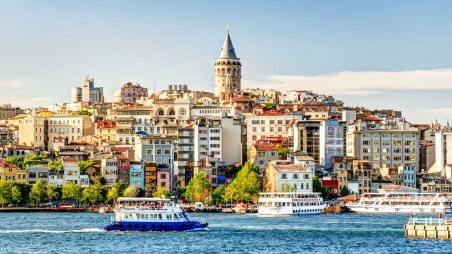
Anthropologist and Armenian Deacon Dr. Christopher Sheklian will deliver a lecture at the Zohrab Center on Tuesday, November 7 at 7PM entitled, Sharagans in the City: Being Armenian in Istanbul Today.
Armenians in Istanbul today navigate a city that is undeniably their home, yet often feels exclusionary. People rarely speak Armenian on the street and many of the churches are hidden behind high walls. Yet the Armenians living there do not necessarily feel excluded or discriminated against. “Bolis” is their home, and they feel a sense of belonging there.
Dr. Sheklian will discuss the complicated sense of belonging that Armenians feel toward Istanbul and toward Turkey. He suggests that the inheritance of the Armenian Apostolic Church’s liturgy helps many Armenians to navigate the city. Through constant exposure to Armenian sharagans and other hymns, Armenians are able to hear the soundscape of Istanbul as one where they also belong.
Christopher Sheklian, a native of central California, earned his PhD in Anthropology from the University of Chicago in 2017. His dissertation, entitled, Theology and the Community: The Armenian Minority, Tradition, and Secularism in Turkey, was based on two years of ethnographic fieldwork with Armenians in Istanbul. An ordained deacon of the Armenian Church, Dr. Sheklian spent a year as a student and researcher at St. Nersess Armenian Seminary in New York. He previously attended the University of California, Berkeley where he majored in Anthropology, and he worked as a substitute
Anthropologist and ordained deacon of the Armenian Church Dr. Christopher Sheklian will speak about how the Armenian Church and especially its sacred music affords a sense of belonging to Armenians of Istanbul.
teacher before earning his MA and PhD at Chicago.
This year, Dr. Sheklian is a Manoogian Postdoctoral Fellow at the University of Michigan, where he plans to develop the conceptual apparatus of his dissertation by considering the connections between Christology, semiotics, and hermeneutics and to pursue a second ethnographic project with Armenian refugees from Syria and Iraq living in the greater Detroit area.
The lecture at the Zohrab Center will take place in the Guild Hall of the Armenian Diocese in New York. The event is free and open to the public. As always, a reception and conversation will follow the lecture.
For further information contact the Zohrab Center at zohrabcenter@armeniandiocese.org or (212) 686-0710.
The words Eastern and Oriental are synonyms. Yet in the 20th century these two words came to be be used to distinguish the two major families of Orthodox churches that were estranged in the fifth century over the dilemma of how properly to understand Jesus’ divinity and his humanity.
The Zohrab Center will inaugurate its Fall 2017 season of evening enrichment events on Tuesday, October 10, 2017 with a book presentation by the internationally acclaimed Orthodox ecumenist and author, Christine Chaillot. Madame Chaillot will present a major new book, edited by her, which brings together essays by over 50 renowned ecumenists, theologians, and clergy representing all of the Orthodox Churches. The book represents the most important new step in the reconciliation of these ancient eastern churches.
CLICK HERE to download a full-color flyer of the event.
The Eastern Orthodox Churches are most prominently represented by the Greek and Russian Orthodox Churches, as well as the Romanian, Bulgarian, Georgian, and other churches, including, especially here in North America, the Orthodox Church of America and the Antiochian Orthodox Church.
The so-called Oriental Orthodox Churches comprise the Armenian, Coptic, Ethiopian, Eritrean, Syrian, and Syrian Malankara Orthodox Churches.
The massive new book, entitled, The Dialogue Between the Eastern Orthodox and Oriental Orthodox Churches, includes important essays by His Holiness Aram I, Catholicos of the Great House of Cilicia; V. Rev. Fr. Daniel Findikyan, Director of the Zohrab Information Center, and V. Rev. Fr. Shahé Aramian, of the Holy See of Etchmiadzin.
The talk and book presentation will take place in the Guild Hall of the Armenian Diocese, 630 2nd Avenue, New York, NY beginning at 7PM. All are welcome to the free event, which will conclude with a reception.
Christine Chaillot is Swiss (Geneva) and Eastern Orthodox (Patriarchate of Constantinople). She is internationally known and respected for her ardent advocacy of the full reconciliation of the Eastern Orthodox and the Oriental Orthodox Churches. Mme. Chaillot is the author of numerous books and articles on the life and spirituality of the churches of the two families and the history and progress of their ecumenical dialogue. A frequent visitor to Armenia, Ethiopia, and all of the lands of historic Orthodoxy, she is not only a friend to hierarchs and theologians of every Orthodox church, but a personal catalyst for deeper relationships and dialogue among them.
Acclaimed photographer Hrair Hawk Khatcherian will present his new, massive album entitled, Khatchkar [Խաչքար] at the Zohrab Center on Thursday, March 30 at 7PM in the Guild Hall of the Armenian Diocese in New York.
Spanning over 500 pages and including well over 1000 exquisite photographs, Khatcherian’s unprecedented photographic compilation comprises easily the most comprehensive photographic documentation of the signature sacred art form of the Armenian people.
Khatchkars are intricately adorned crosses sculpted into stone, which are ubiquitous in the Armenian homeland. Armenians continued to create khatchkars wherever they migrated. As such, beautiful examples of khatchkars—no two of them alike—can be found all over the world, wherever Armenians live or have lived; and they date from the early centuries of Christianity to the present time. They are true markers of Christian Armenian presence.
Born in Lebanon, Khatcherian lives in Canada. There, in 1988 he participated resolutely in the various activities of the Diaspora linked to the Artsakh Movement. In 1993 he was diagnosed with terminal cancer. In his hospital room where he underwent terrible treatments which alone could kill a man, there was on the wall a cross and photographs of Armenia and Artsakh.
“It was by staring at them fiercely, day by day, with my mortally wounded hawk’s eyes, that I succeeded in tearing myself from the claws of Death, to take flight again, and to rise high again in the sky, in the direction of my true destiny,” he writes. Today, fully and miraculously recovered, with his wife and two teenage children, he “lives only for and by Armenia, the Artsakh, and the fundamental references and benchmarks of the Armenian world.”
The presentation is free and open to the public. All are welcome to attend. A reception will follow the event and copies of Khacherian’s book will be available for sale.
For further information contact the Zohrab Center at zohrabcenter@armeniandiocese.org or (212) 686-0710.
Dr. Abraham Terian, Professor Emeritus of Armenian Patristics and Theology at St. Nersess Armenian Seminary will present his new book at the Zohrab Center on Monday, March 20 at 7PM.
The book is entitled, The Festal Works of St. Gregory of Narek: Annotated Translation of the Odes, Litanies and Encomia.This is the first English translation of these poetic works.
Less known than St. Gregory’s celebrated Book of Prayers (or Book of Lamentations as it is sometimes called), the great tenth-century mystic’s jubilant poems on the life of Christ and the great saints and feasts of the Armenian Church are filled with the joyful exuberance of the Christian message. In penetrating theology, masterful poetry and lavish Biblical imagery, St. Gregory summons the reader into his staggeringly intimate experience of God’s goodness and the Church’s holiness.
DR. ABRAHAM TERIAN is Professor Emeritus of Armenian Theology and Patristics at St. Nersess Armenian Seminary. A recipient of the Fulbright Distinguished Chair in the Humanities award and Fellow of the National Academy of Sciences of the Republic of Armenia, he has extensive publications in the fields of Hellenistic, early Christian, and Armenian religious literature.
Dr. Terian’s book includes English translations of more than fifty substantial compositions spanning hundreds of pages of text. As beautifully engaging as Terian’s renditions of the texts are his profuse and learned annotations, which accompany each work. The scholar provides Biblical references (the volume’s Scripture index spans 11 pages of triple columns); generous cross-references with other works in the collection, as well as patristic references, and echoes in Armenian theological and devotional literature.
The book presentation is free and open to the public. Light refreshments will be served and books will be available for sale following Dr. Terian’s opening remarks. For further information contact the Zohrab Center at zohrabcenter@armeniandiocese.org or (212) 686-0710.
Volume 1 of the Armenian Church journal entitled, Yegeghetsee Hayasdanyayts, dated April 1900 and published in Manchester, England. The Zohrab Center’s copy of this precious journal bears the stamp of the “Araratian Armenian Library, Central Falls, Rhode Island.”
Rustling through the countless tattered books that await identification and cataloging in the Zohrab Center’s library, I recently came across an old journal entitled Եկեղեցի Հայաստանեայց. Ամսաթերթ Կրօնական եւ Աստուածաբանական / Yegeghetsee Hayasdanyayts: Amsatert Gronagan yev Asdvadzapanagan [The Church of the Armenians: A Religious and Theological Journal].
The journal was published in Manchester, England by Toros Der Isahagian, a married priest whose byname Jughayetsi marks him as a native of New Julfa, the Armenian quarter of Isfahan in northwestern Iran, an important Armenian commercial and religious center.
The inaugural volume, designated Number 1 April 1900, opens with a congratulatory letter from His Holiness the Catholicos Mgrdich, better known as Khrimian Hayrig. That and subsequent issues contain short essays on the history and doctrines of the Armenian Church, including short articles on saints, holy days, sacraments and other church services, as well as meaty and well-written sermons and commentaries on Bible passages.
The final issue for the year 1900 contains one of the most remarkable writings I have encountered by an Armenian clergyman in modern times. Spanning 34 single-spaced pages, it carries the title: Pastoral Letter to the True Children of the Apostolic Church of the Armenians who are under the Care of this Holy Trinity Armenian Church in Manchester [Թուղթ Հովուական առ հարազատ որդիս Հայաստանեայց Առաքելական Եկեղեցւոյ որք ընդ հովանեաւ Ս. Հոգի (sic) Եկեղեցւոյս հայոց ի Մանչեսթր].
An earlier journal of the same name, produced by Toros Der-Isahagian in Constantinople, 1888.
This extraordinary letter is actually a book-length cross between a genuine Armenian Church catechesis, and a call to spiritual arms for diasporan Armenian Christians in England at the turn of the 20th century. With refreshing originality, Fr. Der Isahagian takes up fundamental components of the Armenian Church’s history, theology, and liturgy and applies this age-old Christian tradition to pressing, practical issues facing the people under his care. Here is an Armenian pastor who is fully rooted in the apostolic, Orthodox eastern tradition of his church, while fully aware of the very modern, very western concerns of his flock.
Not surprisingly for those who know anything about the Armenian Church’s theology, the priest from New Julfa’s exposition is thoroughly and unreservedly Biblical, amounting to a marvelous celebration of the Gospel of Jesus Christ, told from the faith experience of the Armenian people. This is a treatise that deserves to be translated into English and other western languages and distributed widely.
The very next day, quite by chance, I discovered another bound collection of journals with the same name, but published in 1888 in Constantinople. I only had to leaf through a few pages to discover the very same editor at work, in this instance, publishing a more concise, weekly paper with content similar to what he would later create in Manchester. The weekly version provided detailed commentaries on the Bible readings appointed in the Armenian Lectionary for each Sunday, along with essays on saints and feast days falling during that week along with thoughtful sermons on the most practical aspects of Christian life.
Toros Der-Isahagian Jughayetsi’s Commentary on the Divine Liturgy of the Armenian Church was originally published in Jerusalem in 1891. It was reprinted there in 1959.
It turns out that Toros Der Isahagian was a well-known scholar and theologian long before he was ordained a priest in Holy Etchmiadzin around 1896, when he was called to serve the Armenian community in Manchester as their priest. His tenure there was rocky. As the oldest and most affluent Armenian Church community in Europe at the time, Manchester became a magnet for countless Armenian refugees fleeing the growing persecutions in eastern Turkey. At the same time, the Armenian merchants of Manchester, most of them involved in the cotton industry, were constantly called upon to provide financial assistance to the hordes of widows and orphans finding their way to Constantinople on the eve of the Genocide. Fr. Der Isahagian seems to have been the victim of political in-fighting within the community, whose flames were fanned by darkening clouds in the homeland. He resigned his pastorate in 1902.
The few histories of the Armenian community in Manchester that have been published have little more to say about the prolific Der Hayr from New Julfa.
Deacon Allan Jendian of Fresno, California has provided additional information about our prolific priest, culling references from a variety of commemorative booklets and other materials. After his departure from Manchester, Der Toros spent several decades in the United States. After a brief stint as Pastor of the Armenians in Boston, he went to California, where he served as Pastor of Holy Trinity Armenian Church in Fresno (1907), and the first priest of St. Gregory the Illuminator Armenian Church of Fowler (1910-1912, 1916-1917). He subsequently served for shorter periods in Los Angeles (1913-1915), San Francisco, Oakland and Sacramento. He returned to Isfahan in the 1930’s and died there in 1938. He is buried in the All-Savior’s Armenian Monastery there.
Der Toros is referred to in some publications as Der Teodoros. As editor of the first English translation of the Armenian Badarak (Fresno, 1931) his name appears as Theodoros Isaac.
Der Isahagian was born in Nor Jugha in 1861. He was ordained in October 1895 in Holy Etchmiadzin. He earned his Doctor of Divinity degree from the University of Bonn, Germany.
Apart from these scattered references, the literary work he has left behind suggests that he was a true intellectual, a devout servant of God, and a dedicated pastor of the Armenian Church. Several essays and sermons of his are published in the 1896 issues of Ararat, the forerunner of Etchmiadzin, the official organ of the Holy See. He is also the author of a commentary on the Soorp Badarak, the Divine Liturgy of the Armenian Church, which was published in Jerusalem in 1891 with a second edition in 1959.
Here is an excerpt from Der Isahagian’s Foreword to his Armenian Church Journal published in Constantinople:
If, while cultivating our secular mind, we ignore our spiritual development, gradually the spirit will become numb eventually to become completely desensitized and die. Such a person then becomes becomes incapable of grasping spiritual truths because there is no longer any balance between the mind and the spirit.
[YegeghetseeHayasdanyayts , March 6, 1888, No. 1, page 2. Translated by Fr. Daniel Findikyan]
Judging by the extent and superior quality of his writings, much of this priest’s time and energy must have been devoted to writing. One can only admire the tenacity and fervor of Der Toros, who was able to produce all he did while raising a family and caring for a large, diasporan church community at the turn of a troubled century for the Armenian people. When we consider the financial resources required to print and distribute periodical journals, especially at a time when the Armenian community of Manchester, England had other pressing obligations to desperate refugees and victims of violence in the homeland. Fr. Der Isahagian’s literary output and spiritual/educational contribution to the Armenian Church becomes even more exceptional.
This season’s final Zohrab Center enrichment evening will be devoted to the legacy of the celebrated and beloved Armenian priest-musician-composer, Komitas Vartabed.
Ashley Bozian-Murtha will present a talk entitled, Komitas Vartabed and the Survival of Armenian Music at the Zohrab Center on Thursday, June 9 at 7PM.
Komitas is a central figure in the history of Armenian music, particularly the sacred music of the Armenian Church. His contributions span liturgical, folk, and even concert music. Surprisingly, despite his universal admiration today, during his lifetime his work earned him the ire of church officials and his fellow clergymen, who frequently denounced him as a musicological firebrand and moral deviant.
Perhaps more significant than his work inside Armenia, however, is his legacy to the global Armenian diaspora. While controversial during his lifetime, Komitas was uniquely positioned to preserve Armenian music from the oblivion of genocide. Were it not for his oft-condemned inclination to transcribe and transform the music of Armenia, that vast tradition may well have perished in the attempted destruction of the Armenian people.
Much research exists on the life of Komitas, and on Armenian music as a separate entity, but there remains a relative paucity of work to place the two in context with one another. Ms. Bozian-Murtha will survey and sort through the biographical, musicological, and historical research on the composer and his impact on Armenian music. Analyzing the composer’s original compositions and transcriptions along with secondary biographical sources and historical data, she asserts that the very survival of Armenian music in the aftermath of the Genocide is a direct result of Komitas’s labors.
Ashley Bozian-Murtha is a PhD candidate in History at St. John’s University (New York). She holds a B.A. in History and Music and an M.Ed. from Manhattanville College (New York). Following her undergraduate work, she earned an MA in Music History from Hunter College, where she wrote her master’s thesis on the life and work of Komitas Vartabed.
The program will be held in the Guild Hall of the Armenian Diocese in New York. All are welcome to attend the free event, which will be followed by a reception.
For further information contact the Zohrab Center at zohrabcenter@armeniandiocese.org or (212) 686-0710.
Prof. Christina Maranci will explore the 7th-century Armenian Church of Mren on Thursday, May 26 at ZIC.
The Zohrab Center will feature two extraordinary opportunities for Armenian learning, enrichment and conversation next week.
Saints and the Armenian People
On Tuesday, May 24 Dr. Marianna Apresyan, Instructor of Theology at the Gevorkyan Seminary of Holy Etchmiadzin, will lecture on the Saints in the Life and Worship of the Armenian People [Սուրբերը հայ ժողովուրդի կեանքին ու պաշտամունքին մէջ]. She will lecture in Armenian but a printed text of her talk in English translation will be provided.
Also participating will be His Eminence Abp. Yeznik Petrosyan of Holy Etchmiadzin, who is a long-time member of the Armenian Bible Society. He will speak about the work of the Bible Society in Armenia to translate the Bible into Modern Armenia and to disseminate it.
Three Early Armenian Churches and their Message
On Thursday, May 26, Professor Christina Maranci, Arthur H. Dadian and Ara T. Oztemel Associate Professor of Armenian Art at Tufts University, will deliver a talk entitled, Vigilant Powers: Ethics, Art History and Preservation of Armenian Churches.
Dr. Maranci, returns to the Zohrab Center to present her new book, Vigilant Powers: Three Churches of Medieval Armenia. The leading historian of Armenian art and architecture in the West today, she will present the case of three iconic Armenian Churches built during the “global wars” of the seventh century: Mren, Zvartnots and Ptghni. Examining the meaning of their unique designs, she will show how Armenian architects were closely engaged with both Byzantine imperial interests and with contemporary events in the Holy Land, as she uncovers Christian Armenia’s vibrant visual culture, its message, and its precarious state today.
Copies of Dr. Maranci’s book will be available for sale.
Both events will take place in the Guild Hall of the Armenian Diocese in New York at 7PM. All are warmly invited to attend the free events. Each will be followed by a reception and conversation.
For further information contact the Zohrab Center at zohrabcenter@armeniandiocese.org or (212) 686-0710.
A new book by Krikor Pidedjian entitled, Հայ Եկեղեցւոյ Երաժշտութիւնը / The Music of the Armenian Church: An Historical Survey, will be presented at the Zohrab Center this Thursday, April 7 at 7:00PM in the Guild Hall of the Armenian Diocese in New York.
Mr. Pidedjian, an accomplished composer, choral conductor and musicologist specializing in the history, theory and repertoire of Armenian sacred and secular music, has received awards and commendations internationally for his artistic and scholarly contributions. Most recently, he was recognized by the faculty of the Komitas Conservatory in Yerevan, Armenia, where he has lectured frequently. In 2008 His Holiness Catholicos Karekin II awarded him the St. Nersess the Graceful medal for outstanding service to the Armenian Church.
The new book, written primarily in Armenian includes an extensive summary in English and is profusely illustrated with musical examples. The book has been published by the Diocese of the Armenian Church (Eastern).
Presenting the book will be Deacon Rubik Mailian, Director of of Sacred Music and Pastoral Assistant at St. John’s Armenian Church (Southfield, Michigan). Deacon Mailian will speak in English before Mr. Pidedjian makes remarks in Armenian.
Krikor Pidedjian was born into a musical family in Alexandria, Egypt. He studied in the Seminary of the Catholicosate of the Great House of Cilicia, where, concurrent with studies at the Beirut Conservatory, he directed the St. Gregory the Illuminator Cathedral Choir. He received a B.S. from the Mannes School of Music and M.A. from Hunter College, both in New York.He is the founder of numerous choirs and ensembles which, under his direction, have performed Armenian sacred and popular music on stages throughout the world. He has lectured internationally on Armenian music and published extensively. He has received numerous awards and commendations for his musical and scholarly work, most recently by the Komitas Conservatory in Yerevan.
The book presentation is free and open to the public. Copies of Mr. Pidedjian’s book will be available for purchase. A reception will follow. For further information contact the Zohrab Information Center at zohrabcenter@armeniandiocese.org or (212) 686-0710.
 (NOTE: AN EARLIER VERSION OF THIS POST CONTAINED GAVE THE WRONG DATE FOR THIS LECTURE. THE EVENT WILL TAKE PLACE ON THURSDAY, MARCH 1 2018).
 the martyrs of the Armenian Genocide. She has also lectured at St. Nersess Armenian Seminary.
 During his tenure as Primate in New York (1938-1945), Hovsepiants established the Diocesan publication Հայաստանեայց Եկեղեցի / Hayasdanyaits Yegeghetsy [The Armenian Church], raised funds to liquidate the Diocese’s debts, drafted a vision and plan to build a Cathedral and a Seminary for the American Diocese, and
  Professor Ervine will survey the Catholicos’ life and achievements, while she seeks to identify the invisible spirit that fueled them.
 Anthropologist and Armenian Deacon Dr. Christopher Sheklian will deliver a lecture at the Zohrab Center on Tuesday, November 7 at 7PM entitled, Sharagans in the City: Being Armenian in Istanbul Today.
 against. “Bolis” is their home, and they feel a sense of belonging there.
 The words Eastern and Oriental are synonyms. Yet in the 20th century these two words came to be be used to distinguish the two major families of Orthodox churches that were estranged in the fifth century over the dilemma of how properly to understand Jesus’ divinity and his humanity.
 The Zohrab Center will inaugurate its Fall 2017 season of evening enrichment events on Tuesday, October 10, 2017 with a book presentation by the internationally acclaimed Orthodox ecumenist and author, Christine Chaillot. Madame Chaillot will present a major new book, edited by her, which brings together essays by over 50 renowned ecumenists, theologians, and clergy representing all of the Orthodox Churches. The book represents the most important new
  step in the reconciliation of these ancient eastern churches.
 The massive new book, entitled, The Dialogue Between the Eastern Orthodox and Oriental Orthodox Churches, includes important essays by His Holiness Aram I, Catholicos of the Great House of Cilicia; V. Rev. Fr. Daniel Findikyan, Director of the Zohrab Information Center, and V. Rev. Fr. Shahé Aramian, of the Holy See of Etchmiadzin.
 Acclaimed photographer Hrair Hawk Khatcherian will present his new, massive album entitled, Khatchkar [Խաչքար] at the Zohrab Center on Thursday, March 30 at 7PM in the Guild Hall of the Armenian Diocese in New York.
 Dr. Abraham Terian, Professor Emeritus of Armenian Patristics and Theology at St. Nersess Armenian Seminary will present his new book at the Zohrab Center on
  goodness and the Church’s holiness.
 Dr. Terian’s book includes English translations of more than fifty substantial compositions spanning hundreds of pages of text. As beautifully engaging as Terian’s renditions of the texts are his profuse and learned annotations, which accompany each work. The scholar provides Biblical references (the volume’s Scripture index spans 11 pages of triple columns); generous cross-references with other works in the collection, as well as patristic references, and echoes in Armenian theological and devotional literature.


 Deacon Allan Jendian of Fresno, California has provided additional information about our prolific priest, culling references from a variety of commemorative booklets and other materials. After his departure from Manchester, Der Toros spent several decades in the United States. After a brief stint as Pastor of the Armenians in Boston, he went to California, where he served as Pastor of Holy Trinity Armenian Church in Fresno (1907), and the first priest of St. Gregory the Illuminator Armenian Church of Fowler (1910-1912, 1916-1917). He subsequently served for shorter periods in Los Angeles (1913-1915), San Francisco, Oakland and Sacramento. He returned to Isfahan in the 1930’s and died there in 1938. He is buried in the All-Savior’s Armenian Monastery there.
 This season’s final Zohrab Center enrichment evening will be devoted to the legacy of the celebrated and beloved Armenian priest-musician-composer, Komitas Vartabed.
 Perhaps more significant than his work inside Armenia, however, is his legacy to the global Armenian diaspora. While controversial during his lifetime, Komitas was uniquely positioned to preserve Armenian music from the oblivion of genocide. Were it not for his oft-condemned inclination to transcribe and transform the music of Armenia, that vast tradition may well have perished in the attempted destruction of the Armenian people.

 On
On 
 A new book by Krikor Pidedjian entitled, Հայ Եկեղեցւոյ Երաժշտութիւնը / The Music of the Armenian Church: An Historical Survey, will be presented at the Zohrab Center this Thursday, April 7 at 7:00PM in the Guild Hall of the Armenian Diocese in New York.