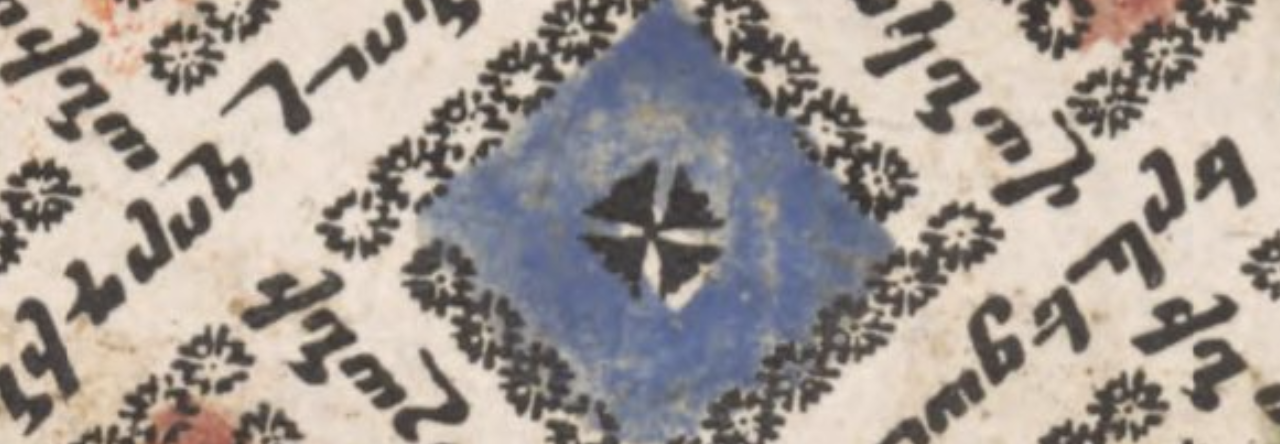
What Makes Armenian Art “Armenian”? Lecture by Dr. Helen Evans. Thursday, April 30

Dr. Helen Evans of New York's Metropolitan Museum of Art will discuss the unique features of Armenian art at an illustrated lecture at the Zohrab Center.
Dr. Helen Evans of New York’s Metropolitan Museum of Art will discuss the unique features of Armenian art at an illustrated lecture at the Zohrab Center.

The distinguished specialist in Early Christian, Byzantine and Armenian art, Dr. Helen Evans, will give an illustrated lecture entitled, Armenian Art: Voice of a People at the Zohrab Center of the Diocese of the Armenian Church (Eastern) on Thursday, April 30 at 7PM.

A visual tradition of the Armenian people that spans many centuries and prosperous communities from the Armenian homeland across the globe, Armenian art is at the same a highly specialized and a vast phenomenon. Dr. Evans will explore what makes a work “Armenian” by looking at key works of art of several historical periods. She will consider the role of the Armenian communities producing the works as well as that of the varied peoples with whom Armenians were in contact in attempting to define new and old ways to make Armenian art compelling not only to its people but also to the larger world.

Helen Evans is the Mary and Michael Jaharis Curator for Byzantine Art at the Metropolitan Museum of Art in New York. She earned her Master’s and Ph.D. degrees from the Institute of Fine Arts, New York University. After joining the curatorial staff of the Museum in 1991, she installed the Mary and Michael Jaharis Galleries of Byzantine Art, the first galleries dedicated to Byzantine art in an encyclopedic museum, in 2000 and expanded them in 2008. Dr. Evans has lectured widely in the United States and abroad and has taught at the Institute of Fine Arts of New York University, Columbia University, Hunter College, the University of Chicago, and Oberlin College. She is a member of the Board of the Mary Jaharis Center for Byzantine Art and Culture at Holy Cross College; treasurer and a founding member of the Association of Art Museum Curators; and former chair of the Editorial Board of the Art Bulletin.

2015-04 HelenEvansFlyerCLICK HERE to download a full-color flyer.

The lecture is free and open to the public. A wine and cheese reception will follow. For further information contact the Zohrab Center at zohrabcenter@armeniandiocese.org or (212) 686-0710.

Learn! Grow! Inspire! 2015 Spring Lecture Series

ZZohrab.001The Zohrab Center presents a rich and varied program of lectures, book presentations, and other stimulating opportunities for enrichment and edification this Winter and Spring. Armenians and anyone interested in Armenian civilization, arts, letters, and faith will find many options to learn, to grow and to inspire others.

A new study on Armenian music, a guide to the Armenian Church’s Holy Week ceremonies, a photographic album of the old Armenian community of Bourj-Hammoud, a Genocide-era novel, and a new travelogue of historic western Armenia will all be showcased by their authors. In addition, noted scholars will hold forth on various facets of Armenian Studies, including Vartan Matossian, Helen Evans and Roberta Ervine. A movie night and other events are also planned.

The Zohrab Center is collaborating with several sister organizations and parishes to co-sponsor some events.

All events are open to the public and most are free of charge. Unless otherwise noted, all presentations take place at the Zohrab Center (Armenian Diocese, New York). Check back frequently for updates and additions. For further information contact ZIC at info@zohrabcenter.org or (212) 686-0710.

ZIC Schedule of Events Spring 2015

Thursday, February 5 (7PM)
“Code Name Haiko: Discovering the Last Unknown Participant in Talaat Pasha’s Liquidation” Dr. Vartan Matiossian, Armenian National Education Committee

Thursday, February 12
Commemoration of St. Vartan and His Companions. Divine Liturgy and Dinner followed by Lecture. Co-sponsored with St. Vartan Armenian Cathedral
“An Anthropologist Considers St. Vartan: Faith, Nation and Memory” Lecture by Christopher Sheklian, University of Chicago

Thursday, February 19 (7PM)
St. Leon Armenian Church, Fair Lawn, NJ

The Life and Work of 19th-Century Armenian Composer Kristapor Gara-Murza. Book Presentation by Krikor Pidejian with Şahan Arzruni.

Thursday, March 5 (7PM)
Co-sponsored with Eastern Diocese Department of Armenian Studies
Portraits of Survival: The Armenians of Bourj Hammoud. Book Presentation by Ariane Ateshian Delacampagne.

Thursday, March 12 (7PM)
A.G.B.U. Center, New York

Historic Armenia after 100 Years. Book Presentation by Matthew Karamian

Thursday, March 19 (7PM)
“A Guided Tour of Holy Week in the Armenian Church” Lecture and Book Presentation by Fr. Daniel Findikyan, Zohrab Information Center/St. Nersess Armenian Seminary

Wednesday, April 8 (7PM)
“Picking Up the Pieces: Three Bishops and Their Vision for the Armenian Church circa 1920” Lecture by Dr. Roberta Ervine, St. Nersess Armenian Seminary

Thursday, April 16 (7PM)
Co-sponsored with the Eastern Diocese Department of Armenian Studies
The Martyred Armenian Writers 1915-1922. Book presentation by Herand Markarian

Thursday, April 30 (7PM)
“Armenian Art: Voice of a People” Dr. Helen Evans, Metropolitan Museum of Art

Tuesday, June 2 (7PM)
The Survivor. Book Presentation: Rosemary Hartounian Cohen.

Treasures from ZIC: Zvartnots Literary and Art Review

photo 1The Zohrab Center recently received a dozen early issues of the Armenian periodical Zvartnots. The journal of literature and art was published intermittently in Paris from 1929 to 1964. The precious issues were donated by Mr. and Mrs. Hagop and Sylvia of Boyajian of Wilbraham, Massachusetts.

The Zohrab Center is the only library in the United States to hold these issues.

Zvartnots contains original poems, short stories, essays, literary criticism and articles on aspects of Armenian arts and music by Armenian authors. As well, the reader will discover Armenian translations of noted non-Armenian authors of the day. Among the contributors were some of the giants of twentieth century Armenian literature and art including Vahan Tekeyan, Arshag Chobanyan, Hagop Oshagan, Yeghishe Charents, Shahan Shanhur, Shavarsh Nartuni, Nvart Kalpakian, Nigoghos Sarafian, Gurgen Mahari,and a host of mysterious pen-names.

Alongside marvelous poems and short literary pieces, the inaugural issue features an Armenian translation of an essay by the Austrian philosopher and novelist Stefan Zweig; an article on pre-Christian Armenian architecture by the great historian of architecture Toros Toromanian; and  a tribute to Franz Schubert on the hundredth anniversary of his death by a very young Ara Bartevian, who would later become a well-known musician, composer and choral conductor.

Indeed, in the preface to the first issue of Zvartnots, the editor, Hrant Paluian, stresses that the new journal would be “the refuge for those young people who have been held captive to the aged caretakers of our literature.” True to the secularism of the moment, he  continues sardonically:

The residents of Zvartnots, with angelic innocence, have been purified of political passions, partisan enmities and ridiculous heresies. They have been purged of religious and moral prejudices. They believe only in Armenian literature and art.

The word Zvartnots derives from the Armenian zvartunk, literally, “vigilant ones,” the angels who serve God joyfully and tirelessly, and who serve as models of the Christian life. The name was given to the famous seventh-century round church in Etchmiadzin, the ruins of which can be seen today.

The Zohrab Center’s new issues of this marvelous testament to Armenian intellectual vitality between the World Wars in Europe have been added to the ZIC online catalogue. Anyone interested in perusing them is welcome to visit the Center or to contact the staff for questions and further assistance.

MDF


What Is Dutch Art Doing in Early Armenian Printed Books? Dr. Sylvie Merian to Present the Case at ZIC on April 9

"Tree of Life" Dutch woodcut print dated 1646 by Christoffel van Sichem. Note the monogram "CvS" in the lower left corner.
“Tree of Life” Dutch woodcut print dated 1646 by Christoffel van Sichem. Note the monogram “CvS” in the lower left corner.

Noted art historian Dr. Sylvie Merian of The Morgan Library in New York will speak at the Zohrab Center on Wednesday, April 9 at 7PM on the topic, Dutch Woodcut Art in the Earliest Armenian Printed Books: A Book Detective Unravels the Mysteries.

Dr. Merian has been researching early Armenian books printed in Constantinople in the Zohrab Information Center’s rich rare book collection, especially focusing on woodcut illustrations in religious books produced by Armenian artists. (Click here for a recent exposé of her research on this blog).

Many of the compositions for these illustrations were modeled after western European prints that found their way to Ottoman Turkey and Savafid Iran during the 17-18th centuries in richly-illustrated books printed in Armenian, Latin, and other European languages.

CLICK HERE TO DOWNLOAD A FLYER.

#ZICbookdetective #ZohrabCenter

"Tree of Life" as found in an Armenian Sharagnots-Hymnal published in Constantinople in 1742. Note the monogram ԳՄ of the Armenian artists in the lower right corner.
“Tree of Life” adapted from the original Dutch version, found in an Armenian Sharagnots-Hymnal published in Constantinople in 1742. Note the ԳՐ in the lower left corner, the monogram of the Armenian artist and printer Grigor Marzuanetsi. The Armenian Hymnal is from the Zohrab Center’s Rare Book Collect

Through countless hours of what she calls “book-looking,” Merian has identified many of the exact prints used by Armenian artists as models. Many of these were Dutch woodcuts.

The illustrations provided inspiration not only for Armenian woodcut artists, but also for Armenian silversmiths (who used them as imagery for silver plaques used on religious books), manuscript artists, and even painters of wall paintings in churches of New Julfa, an Armenian suburb of Isfahan, Iran. New Christian iconography and decorative motifs were thereby disseminated in various media throughout the region, and a number of examples have been found in the Zohrab Center’s remarkable early book collection.

Dr. Merian will show numerous examples from the orginal European illustrations, the adapted versions by Armenian artists, and their later adoption for use in non-book media.

The presentation will take place at the Armenian Diocese, 630 Second Avenue, New York, NY. A discussion and reception will follow. For further information contact the Zohrab Center at zohrabcenter@armeniandiocese.org or (212) 686-0710.

CLICK HERE TO DOWNLOAD A FLYER.

#ZICbookdetective #ZohrabCenter

New Travel Guide to Turkey Spotlights Ancient Armenian Sites

by ANDREW KAYAIAN

InnocentsReturn
Jack Tucker, Innocents Return Abroad: Exploring Ancient Sites in Eastern Turkey (Volume 2). CreateSpace Independent Publishing Platform, 2013. ISBN 978-1482392173. 274 pp.

The Zohrab Information Center is delighted to present a fascinating new addition to its vast and growing collection: Innocents Return Abroad, Volume II: Exploring Ancient Sites in Eastern Turkey by Jack Tucker. A  succinct work of scholarship, Innocents Return Abroad is a traveler’s guidebook to the many ancient ruins and sites in Eastern Turkey. In a welcome innovation, the author provides exact GPS coordinates for each of the sites described. This geographic information allows pilgrims, tourists and scholars to find these largely forgotten and unmarked sites. That, in turn, will foster study and conservation of these precious monuments, the author anticipates. Continue reading “New Travel Guide to Turkey Spotlights Ancient Armenian Sites”

Wealth, Politics and Medieval Armenian Iconography: Hazel Antaramian Hofman to Speak on November 12 at the ZIC

Portrait of King Gagik-Abas, Queen Goranduxt, and Princess Marem.  Courtesy of Dickran Kouymjian, The Arts of Armenia (Accompanied by a Collection of 300 Slides in Color), Lisbon:  Calouste Gulbenkian Foundation, 1992. Photograph Ara Güler, Image No. 69.
Portrait of King Gagik-Abas, Queen Goranduxt, and Princess Marem. Courtesy of Dickran Kouymjian, The Arts of Armenia (Accompanied by a Collection of 300 Slides in Color), Lisbon: Calouste Gulbenkian Foundation, 1992. Photograph Ara Güler, Image No. 69.

Award-winning artist and scholar Hazel Antaramian Hofman will deliver an illustrated lecture entitled, “Dressing the Part: Textile Wealth in an Eleventh-Century Armenian Miniature and its Interpretive Meaning,” at the Zohrab Center on Tuesday, November 12, 2013 at 7:00PM.

In 1911 a single manuscript  folio containing a damaged yet exquisite miniature painting was found in the print shop of the Armenian Patriarchate of Jerusalem. It was soon recognized as belonging to perhaps the most famous and important Armenian manuscript of the 11th century, a profusely-illuminated copy of the four Gospels commissioned by King Gagik-Abas of Kars, Jerusalem manuscript no. 2556.

The folio depicts a royal family portrait: King Gagik-Abas, his wife Queen Goranduxt and their daughter, the heir to the throne, Princess Mariam. This is the only known Armenian painting of a Bagratid dynastic family. Though partially defaced, some of the facial features excised, the painting, with its refined style and sumptuous detail, is well-known to art historians.

Artist-Scholar Hazel Antaramian Hofman will speak at the Zohrab Center on Tuesday, November 12 at 7PM.

Hazel Antaramian Hofman asks why the family portrait was represented the way it was? Her analysis concludes that coded in the details of the painting, particularly in its composition and in the careful depiction of opulent textiles, one can read a great deal about the King, his political ambitions and the socio-economic situation of the Bagratid Kingdom of Armenia.

“The image was created during [a] tumultuous period in the history of the Bagratuni’s,” writes Antaramian-Hofman in her 150-page Master’s thesis on the eleventh-century miniature painting of the last Bagratuni dynastic family in Western Armenia. “The composition of the image and the opulence of the represented textiles convey dynastic affluence in an effort to support the central figure, the young daughter, within the socio-political context of medieval life in the region,” the artist-scholar concludes.

Antaramian-Hofman will present her findings and elaborate on her past research, where she integrated the iconographic dimension of the painting with the economic, cultural, and socio-political contact of the royal family and their hegemonic neighbors. She will also discuss her plans to expand her study on this rare Armenian painting for future publication.

Ms. Antaramian Hofman was born in Soviet Armenia and settled in the United States at age five. Her education has both artistic and scientific roots: before earning an M.A. degree in Art and Design from Fresno State University, she already held an associate degree in fashion design and illustration, an undergraduate degree in chemistry with a minor in biology; and am M.S. degree in environmental science. An accomplished artist, she has participated in numerous group and solo exhibitions. Her latest creative and scholarly work has focused on the repatriation of Armenians to Soviet Armenia following World War II.

The lecture will take place at the Zohrab Center, Diocese of the Armenian Church, 630 Second Avenue, New York, NY. It is free and open to the public. A reception will follow. For further information contact the Zohrab Center at (212) 686-0710 or zohrabcenter@armeniandiocese.org.